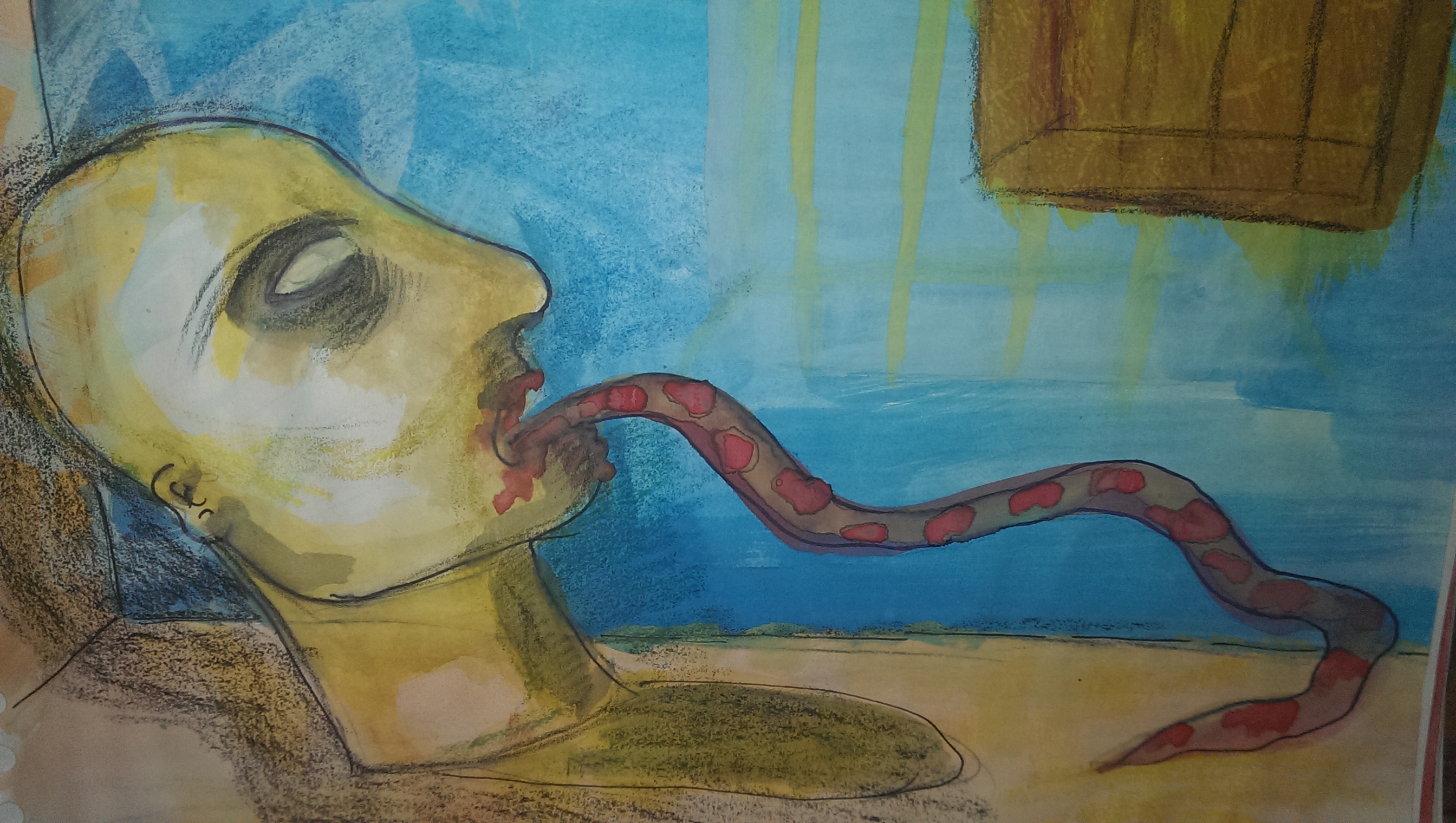
The Covid 19 Pandemic wrecked many countries’ economies, jettisoned jobs and meant that workplaces went from being deemed ‘unsafe’ to being the responsibility of the individual; there was no longer a sense that you could get qualifications and go to somewhere that would look after you; you had to do it all yourself. Alongside this, however, the collectivisation of processes across the globe through technology – health care, education, special interest groups et cetera – meant the death of the individual and individual rights. The vaccination programme meant that your body was no longer your own: your immune system had to be outsourced now; any suspicions you might have made you a ‘conspiracy theorist’ and therefore some kind of enemy of civilisation. You were therefore regarded as something of a leper; even though you might be in full health, you were regarded as surplus to requirement and left to your own devices. Mental Health Services had long been ignoring people in the hope that they would eliminate themselves, improving unemployment and ill health statistics by reducing the volumes; now it was the physical practitioners who turned away, under the guise of being accessible through online forms, which alienated elderly people and those who did not have access to the technology.
She knew that the technology would oust the human race. How clever – to invent something which would take over and hold you in its thrall; doing jobs without demanding payment or pensions, presenting options worded in such a way as to make it seem as though you were refusing, rather than seeking, help.
A clever and quiet semantic shift had long been taking place. At first, it was disguised as prissy niceness; you couldn’t say certain things without upsetting people of a particular colour or background or earning capacity. Marketing had worked away over the years to divide the population into socio-economic customers of something or other, be it ‘crisps and videos’ or ‘health spas and status’. People filled in questionnaires and got discount vouchers or freebies in addition to their weekly shop; revealing not just their circumstances but their aspirations. These were assiduously noted and relentlessly targeted in sales quotas. In a bid to make life easier for people; to enhance the enjoyment of living; to meet and to exceed people’s expectations and then, because satisfaction is bad for sales targets, to create new needs, new expectations, new inadequacies.
There is nothing so universally human, nor so lucrative, as a needs deficit. The progress of civilisation involves progression of needs; new echelons of dissatisfaction and aspiration. Once everybody has the three piece suite and the video recorder and the plasma screen and the washer-dryer, the rise of credit agreements could help propel the rise in the uptake of technology, from universal television remote controls to laptop computers to smart phones to Applications to distract you from the steadily relentless existential angst of being alive: I have a right to get my needs met.
The opportunity to amass objects in quest of the next Big Thing is an addiction that has been legitimised since time, or at least taxes, began. Once you can persuade people to buy stuff, or to buy into the idea of something, you’ve got an income stream. Once you can buy and sell products and services across the entire globe, you can accumulate enough market share to be considered cutting edge, and then High Performance.
A combination of factors has meant that, for some people, the idea that life could so easily come to an abrupt end has made them braver, more determined to Seize The Day


